
Crocus sativus L. · Family: Iridaceae · Stigma Extract
A water-soluble saffron stigma extract standardised to Safranal 0.5% and Crocin 2.0% by HPLC. Prepared from the prized red stigmas of Crocus sativus for cosmetic, personal-care, and nutraceutical formulators. CoA-backed, HPLC-authenticated supply from India.
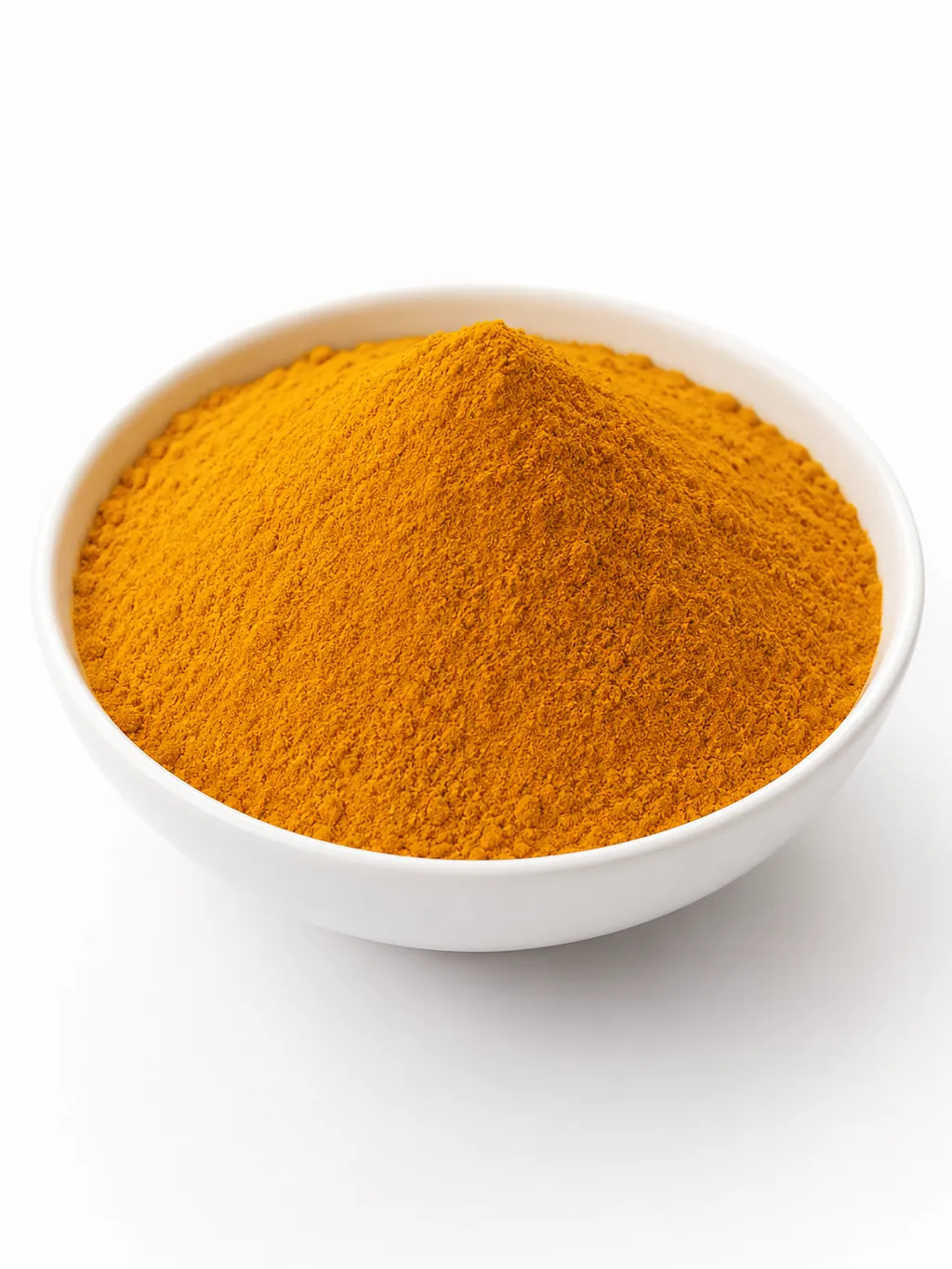
Actual Product
Crocus sativus · Safranal & Crocin · Actual BatchA standardised botanical active from the world's most prized spice
Saffron (Crocus sativus L.) is the dried stigma of the autumn-flowering saffron crocus — the same red thread prized as the world's most valuable spice by weight. Each flower yields only three stigmas, hand-harvested and dried, which makes concentrated, standardised extracts a practical way for formulators to deliver saffron's signature actives at a controlled specification.
The characteristic constituents of saffron are the carotenoid crocin (and its aglycone crocetin), the bitter glycoside picrocrocin, and the volatile safranal that carries saffron's aroma. SV Botanica standardises this extract to Safranal not less than 0.5% and Crocin not less than 2.0%, both quantified by HPLC, so every batch is defined by its two most meaningful markers rather than colour alone.
The extract is prepared from stigma material of Indian origin and finished as a free-flowing, water-soluble powder, yellow to orange in colour. Water solubility makes it well suited to aqueous cosmetic serums and emulsions as well as functional formulations. Slight colour variation between batches is normal for a herbal material and reflects seasonal and geographical variation in the raw stigma.
We supply cosmetic manufacturers, personal-care brands, and nutraceutical formulators against buyer specifications, with a batch-specific Certificate of Analysis on every shipment. New buyers can start with our saffron extract buyer's guide for sourcing and specification benchmarks.
The signature phytochemicals that define saffron
The water-soluble carotenoid glycoside responsible for saffron's colour value. One of the two HPLC markers used to standardise this extract (NLT 2.0%).
The principal volatile aroma compound of saffron, formed from picrocrocin. Standardised here to NLT 0.5% by HPLC.
The carotenoid aglycone of crocin — the smaller, more lipophilic backbone that the crocin glycosides are built on.
The bitter monoterpene glycoside responsible for saffron's characteristic taste and the biosynthetic precursor to safranal.
The broader family of coloured carotenoids that give saffron its yellow-to-orange hue and underpin its antioxidant-active positioning.
Safranal and crocin together form the identity and assay basis of every batch — verified against a reference HPLC profile before release.
Why formulators specify a standardised saffron extract — the functional role of each marker
Crocin is a water-soluble carotenoid that delivers saffron's characteristic yellow-to-orange hue. In cosmetic and functional formulations it contributes a natural, plant-derived colour without synthetic dyes.
Safranal is the principal volatile behind saffron's distinctive aroma. Standardising to safranal gives formulators a consistent sensory signature batch to batch.
The crocin and crocetin carotenoids are widely studied for antioxidant activity, which supports the extract's use in "brightening" and antioxidant-led skincare positioning.
Full water solubility allows clean incorporation into aqueous serums, toners, emulsions and liquid nutraceutical bases without specialised solubilisers.
Dual standardisation to safranal and crocin, verified against a reference HPLC profile, gives a defensible identity and assay for a botanical that is frequently adulterated.
A free-flowing powder passing ≥95% through #40 mesh with controlled bulk density disperses and blends predictably across batches.
These are functional and physico-chemical properties of the actives; SV Botanica does not make medical or therapeutic claims for this ingredient. For the analytical detail behind the two markers, see safranal, crocin & how saffron extract is standardised by HPLC.
The core specification supplied against document SVB/QC/PS/CS/001
| Grade | Standardisation | Form | Best For | Solubility |
|---|---|---|---|---|
| Cosmetic Grade Standard | Safranal NLT 0.5% · Crocin NLT 2.0% (HPLC) | Yellow to orange powder, ≥95% through #40 mesh | Skincare serums, creams, masks, personal care | Water-soluble |
| Nutraceutical Use Same spec | Safranal NLT 0.5% · Crocin NLT 2.0% (HPLC) | Free-flowing powder, ≥95% through #40 mesh | Standardised botanical active in functional formulations | Water-soluble |
Standardisation is dual-marker: Safranal (not less than 0.5% w/w) and Crocin (not less than 2.0% w/w), both by HPLC, with the identity confirmed against a reference HPLC profile across all major peaks. Higher marker concentrations and custom mesh or packaging can be quoted against buyer specification and order volume. Every batch is released against a batch-specific Certificate of Analysis.
Saffron is bought in four forms. The standardised stigma extract is the stocked item; the others are sourced against a confirmed order.
| Form | What it is | Specification basis | Availability |
|---|---|---|---|
| Standardised stigma extract powder | Crocus sativus stigma, water-based extraction, dried on a food-grade carrier | Safranal NLT 0.5% and crocin NLT 2.0% by HPLC; identity against a reference HPLC profile | Stocked; water-soluble |
| Custom crocin / safranal levels | Same extract adjusted to a higher or lower marker level | Crocin and safranal by HPLC to your specification | On request, subject to minimum quantity |
| Saffron threads (whole stigma) | Dried Crocus sativus stigmas, not extracted | ISO 3632 category (colouring strength, picrocrocin, safranal); moisture; foreign matter | On enquiry, subject to lot; phytosanitary certificate usually required |
| Ground saffron (stigma powder) | Milled whole stigma | ISO 3632 colouring strength; identity; adulterant screen | On enquiry, subject to lot |
Saffron is the most adulterated spice in the trade, so identity and the adulterant screen matter as much as the marker figures. See safranal and crocin standardisation, saffron adulteration and authenticity and the saffron extract buyer’s guide.
Full product specification per SVB/QC/PS/CS/001 (Rev 00, effective 17 July 2026). Values are specification limits, not batch results; a batch-specific CoA is issued per shipment.
| Parameter | Specification / Limit | Method |
|---|---|---|
| Botanical Source | Crocus sativus L. | — |
| Plant Family | Iridaceae | — |
| Part Used | Stigma | — |
| Country of Origin | India | — |
| Colour | Yellow to Orange* | Visual |
| Odour | Characteristic | Organoleptic |
| Taste | Characteristic | Organoleptic |
| Texture | Free-flowing powder without lumps | Visual |
| Identification | HPLC profile to comply with reference material w.r.t. all major peaks | By HPLC |
| Loss on Drying (% w/w) | NMT 8.0 | USP <731> |
| Loose Bulk Density (g/ml) | 0.30–0.60 | USP <616> |
| Tapped Bulk Density (g/ml) | 0.40–0.80 | USP <616> |
| Solubility | Soluble in water | In-house |
| Particle Size (#40 mesh, % w/w) | NLT 95.0 | USP <786> |
| Content of Safranal (% w/w) | NLT 0.5 | By HPLC |
| Content of Crocin (% w/w) | NLT 2.0 | By HPLC |
| Lead (ppm) | NMT 5.0 | ICP-MS / ICP-OES |
| Arsenic (ppm) | NMT 2.0 | ICP-MS / ICP-OES |
| Cadmium (ppm) | NMT 0.5 | ICP-MS / ICP-OES |
| Mercury (ppm) | NMT 0.2 | ICP-MS / ICP-OES |
| Residual Solvents (ppm) | To comply with USP limits | USP <467> |
| Total Aerobic Microbial Count (cfu/g) | NMT 5,000 | USP <2021> |
| Total Yeast & Mould Count (cfu/g) | NMT 100 | USP <2021> |
| Coliforms | Negative / 10 g | USP <2022> |
| Escherichia coli | Negative / 10 g | USP <2022> |
| Salmonella sp. | Negative / 25 g | USP <2022> |
| Staphylococcus aureus | Negative / 10 g | USP <2022> |
| Pseudomonas aeruginosa | Negative / 10 g | USP <2022> |
| Cultivation Status | Cultivated | Declaration |
| Sanitising Treatment | Non-irradiated | Declaration |
| Genetic Modification Status | GMO-free | Declaration |
| Shelf Life | 36 months from date of manufacture, in original packed condition | — |
| Storage | Cool, dry place, preferably below 30°C, protected from moisture, sunlight and heat | — |
*The product is of herbal origin; slight colour variation may occur due to geographical and seasonal variation in the raw material. Both actives are standardised by HPLC and the batch identity is confirmed against a reference HPLC profile. A current Certificate of Analysis and MSDS are issued with every batch; declarations cover cultivation, irradiation and GMO status.
From stigma to standardised extract — authenticated, tested, documented
Raw Material & Authentication: The extract is prepared from the stigma of Crocus sativus L. of Indian origin. Because saffron is among the most frequently adulterated botanicals in trade, identity is central to release: every batch must match a reference HPLC profile across all major peaks before it is accepted.
Manufacturing & Testing: Saffron Extract Powder is manufactured to specification SVB/QC/PS/CS/001 at certified manufacturing facilities. Each batch runs through a full QC battery — safranal and crocin assay by HPLC, loss on drying, bulk density and mesh, heavy metals by ICP-MS/ICP-OES, residual solvents (USP <467>), and a complete USP microbiological panel — before release.
Documentation: Every shipment is supplied against a batch-specific Certificate of Analysis with an MSDS, plus declarations covering cultivation status (cultivated), sanitising treatment (non-irradiated) and GMO status (GMO-free). Country of Origin and export documentation are provided on request. Procurement teams can reference our saffron extract supplier evaluation guide when qualifying vendors.
What backs every batch of saffron extract
Key information for global product registration and labelling
Crocus sativus (saffron) extract is an established cosmetic ingredient with a recognised INCI listing. As a colouring/active input it should be used within the buyer's finished-product safety assessment; SV Botanica supplies the material specification and CoA to support that dossier. This product is not intended to diagnose, treat, cure or prevent any disease.
Where used as a botanical active in supplement or functional formats, the extract is supplied to defined safranal and crocin specifications with full analytical documentation. Buyers are responsible for determining suitability and for compliance with the relevant food-supplement regulations in their market.
Supplied from India by SV Botanica — FSSAI registered and an APEDA-registered exporter. Material is declared as cultivated, non-irradiated and GMO-free, and shipped against a batch-specific Certificate of Analysis with export documentation available on request.
Deep-dive articles for formulators, buyers, and brand owners
How to specify markers, method, and documentation when sourcing saffron extract.
TechnicalWhat the two markers mean and how standardised saffron extract is measured.
QualityHow saffron is faked and how HPLC profiling proves a genuine extract.
FormulationUsing a water-soluble saffron active in serums, creams and masks.
ProcurementA checklist for qualifying a saffron extract supplier from India.
MarketDemand drivers and end-uses shaping the saffron extract category.
Frequently co-formulated with Saffron Extract in cosmetic & antioxidant blends
Technical and commercial questions answered by our ingredients team
HPLC-standardised, lab-tested, fully documented supply of water-soluble saffron stigma extract. Standardised to Safranal 0.5% & Crocin 2.0%. Samples available for qualified buyers.
Supplied as a bulk ingredient for further manufacture. Buyers are responsible for compliance with the regulations of their destination market. This product is not intended to diagnose, treat, cure or prevent any disease.
We use cookies for analytics and to measure our advertising. Essential cookies are always on. Privacy policy