
Silybum marianum L. · Seed · Standardized to 80% Silymarin (UV)
The world's most researched liver-support botanical. SV Botanica supplies a Silybum marianum seed extract standardized to 80% silymarin by UV, with identity confirmed by HPLC — the silibinin-bearing flavonolignan complex behind milk thistle's hepatoprotective reputation. Ethyl-acetate extracted, non-ETO and non-irradiated, heavy-metal tested and made at GMP-certified facilities, with 70%, 65% and silibinin-by-HPLC grades available per batch.
Bulk Ingredient
Silybum marianum · Seed · SilymarinThe classic liver-support botanical, concentrated to a defined silymarin profile
Silybum marianum — milk thistle — is the most extensively researched botanical for liver health. Its activity is attributed to silymarin, a complex of flavonolignans concentrated in the seed: silybin (silibinin) A & B, isosilybin A & B, silychristin and silydianin, together with the flavonoid taxifolin.
SV Botanica supplies Milk Thistle Extract standardized to 80% silymarin by UV, with identity confirmed by HPLC. Lower-percentage 70% and 65% grades, and a silibinin-by-HPLC grade, are produced on request — with a batch Certificate of Analysis on the marker figure every time.
A note on the assay: UV spectrophotometry measures the whole silymarin complex and reads high (the basis of the 80% figure), while HPLC quantifies the individual flavonolignans and is usually reported as silibinin, which reads lower. An "80% by UV" material and a "~30% silibinin by HPLC" material can be the same extract — so always confirm the method. See silymarin standardisation: UV vs HPLC.
A note on identity: cheaper thistles such as blessed thistle do not contain the silymarin complex, so a UV number alone can mislead — see milk thistle adulteration. We supply supplement, nutraceutical, veterinary and functional-food manufacturers across Europe, the USA, the Middle East and Southeast Asia — start with the quote request form or the full Milk Thistle extract buyer's guide.
Key compounds driving milk thistle's hepatoprotective profile
The principal and most active flavonolignan pair — the "silibinin" that EP/USP monographs quantify by HPLC and the benchmark of extract quality.
Structural isomers of silybin that add to total silymarin and to the antioxidant flavonolignan pool.
A major silymarin flavonolignan, typically the second-most abundant, and part of the standardised complex.
A further flavonolignan of the silymarin complex, present in the seed and counted in the total UV figure.
The flavonoid (dihydroquercetin) precursor to the flavonolignans and part of the wider silymarin fingerprint.
Native seed flavonoids and matrix that accompany the standardised silymarin complex in a full-spectrum grade.
Evidence from clinical and pharmacological research on silymarin and silibinin
Silymarin is the most-studied hepatoprotective botanical; a comprehensive clinical review documents its use in supporting liver-cell integrity and function.
Ref: Gillessen A & Schmidt HH, 2020; Adv TherSilymarin and silibinin act as potent antioxidants, scavenging free radicals and supporting cellular glutathione status.
Ref: Surai PF, 2015; AntioxidantsSilymarin supplementation showed favourable effects on markers of non-alcoholic fatty liver and metabolism in a clinical review.
Ref: Abenavoli L et al., 2018; Phytother ResStandardised milk thistle has a long clinical tradition in supportive liver therapy and detoxification protocols.
Ref: Saller R et al., 2001; DrugsSilymarin showed benefit on glycaemic control and renal markers across meta-analysed clinical trials.
Ref: Voroneanu L et al., 2016; J Diabetes ResSilybin modulates inflammatory and oxidative signalling pathways, consistent with silymarin's broad protective profile.
Ref: Bijak M, 2017; MoleculesThese statements describe traditional use and published research; they have not been evaluated by the FDA and are not intended to diagnose, treat, cure or prevent any disease. Milk thistle pairs naturally with other liver and metabolic botanicals — see our Turmeric (Curcumin) Extract and Berberine Extract for detox and metabolic blends. For the science behind the markers, read silymarin & liver health: the research.
Select the right silymarin profile and assay basis for your formulation
| Grade | Specification | Assay | Best For | Certifications |
|---|---|---|---|---|
| Silymarin 80% Standard | NLT 80% silymarin; identity by HPLC | UV | Premium liver-support supplements | GMP, Halal |
| Silymarin 70% Common | NLT 70% silymarin | UV | Mainstream capsules & tablets | GMP, Halal |
| Silymarin 65% Economy | NLT 65% silymarin | UV | Cost-sensitive & blended formulas | GMP, Kosher |
| Silibinin by HPLC On Request | Defined silibinin (silybin A+B) % by HPLC | HPLC | EP/USP monograph-matched labels | Available per batch |
| Organic / Water-Dispersible | Standardised; organic on request | UV | Certified-organic & beverage products | GMP, Organic (on request) |
The documented stock grade is 80% silymarin by UV with HPLC identity (the grade backed by our current Certificate of Analysis, Spec No. SVB-SPEC-MT-01). Because UV and HPLC report on different bases, we specify the method alongside the percentage — read silymarin standardisation: UV vs HPLC before comparing quotes.
Milk Thistle Extract is bought in five forms. The standardised extract is the stocked item; granulated and dispersible grades are produced on request and raw botanical forms are sourced against a confirmed order.
| Form | What it is | Specification basis | Availability |
|---|---|---|---|
| Standardised extract powder | Silybum marianum seed extract, dried and milled | NLT 80% silymarin (UV), identity by HPLC | Stocked |
| Granulated (direct-compression) | Extract granulated for tablet lines | Same marker, declared on the granule | On request |
| Water-dispersible / soluble | Extract in a dispersible matrix for beverages, gummies and sachets | Marker declared on the matrix basis; carrier named | On request |
| Seed powder (non-extracted) | Cleaned Silybum marianum seed, milled to mesh | Botanical identity by TLC; heavy metals and microbial panel | On enquiry, subject to lot; phytosanitary certificate usually required |
| Whole seed | Cleaned, graded whole seed | Purity, moisture, foreign matter; pesticide screen | On enquiry, subject to lot; spice-trade item |
A marker percentage without its assay method is not a specification; ask for the method and the plant part on every quotation. Read Silymarin Standardisation: Why UV and HPLC Disagree, Milk Thistle Adulteration: The Cheaper-Thistle Problem and Milk Thistle Extract Buyer's Guide: Silymarin Grades, Assay & Sourcing before comparing offers.
Typical specification — 80% silymarin (UV) seed grade (mapped from Spec No. SVB-SPEC-MT-01)
| Parameter | Specification | Method |
|---|---|---|
| Botanical Name | Silybum marianum L. | — |
| Part Used | Seed | — |
| Silymarin (total) | NLT 80.0% w/w | UV Spectrophotometry |
| Identification | Complies (silymarin flavonolignans) | HPLC |
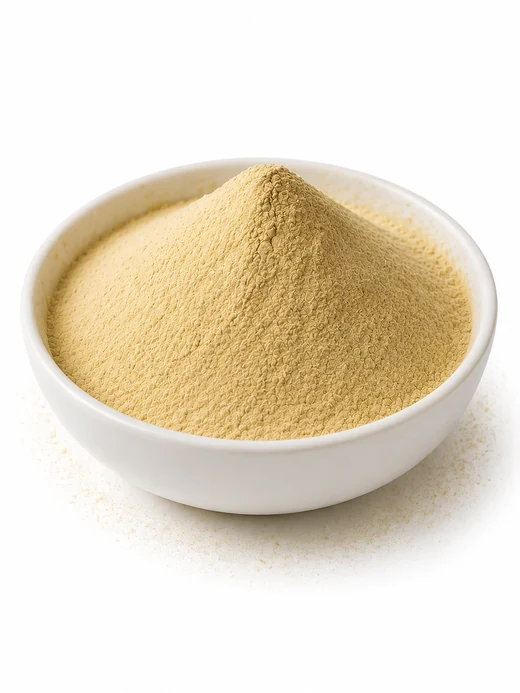
| Appearance | Yellow to yellowish-brown amorphous powder | Organoleptic |
| Loss on Drying (105°C) | NMT 5.0% | USP <731> |
| Residue on Ignition | NMT 0.5% | USP <561> |
| Bulk Density | NLT 0.35 g/mL | USP <616> |
| Extraction Solvent | Ethyl acetate | — |
| Residual Solvent (Ethyl acetate) | NMT 5,000 ppm | USP <467> |
| Particle Size | NLT 100% through #80 mesh | USP <786> |
| Heavy Metals (Pb/As/Cd/Hg) | ≤3 · ≤1 · ≤1 · ≤0.1 ppm | ICP-MS |
| Total Plate Count | NMT 1,000 CFU/g | USP <2021> |
| Yeast & Mould | NMT 100 CFU/g | USP <2021> |
| E. coli / Salmonella / S. aureus / P. aeruginosa | Absent | USP <2022> / <62> |
| Irradiation / ETO | Non-irradiated / Non-ETO | — |
| Status | GMO-free · BSE/TSE-free · cultivated | — |
| Shelf Life | 36 months (sealed, cool, dry) | — |
| Packaging | 25 kg HDPE drum with inner PE liner; 1 & 5 kg pouches for samples | — |
Figures shown are typical specifications for the 80% silymarin (UV) seed grade and reflect Spec No. SVB-SPEC-MT-01; a batch-specific CoA is issued with every shipment. MSDS, allergen, non-ETO, Non-GMO and BSE/TSE-free declarations accompany each batch. Specifications for 70%, 65%, silibinin-by-HPLC, organic and water-dispersible grades available on request.
From authenticated seed to a defined silymarin grade — traceable, tested, certified
Raw Material Sourcing: The extract is produced from authenticated, cultivated Silybum marianum seed. Botanical identity is documented at intake and confirmed against the silymarin flavonolignan fingerprint — the safeguard against substitution with cheaper, silymarin-free thistles.
Manufacturing & Testing: Seed is cleaned, extracted with ethyl acetate and standardised to silymarin in GMP-certified facilities. Each batch runs a full QC battery — UV assay of total silymarin and HPLC identity, loss-on-drying, residue-on-ignition, bulk density and sieve checks, residual solvent by USP <467>, heavy metals by ICP-MS, and a complete microbiological panel — before release. Material is non-irradiated and non-ETO.
Documentation: Every shipment comes with a Certificate of Analysis, MSDS, Allergen Declaration, BSE/TSE-free statement, Non-GMO affidavit, non-ETO declaration and Country of Origin Certificate. Halal and Kosher grades are available; organic certification on request. To qualify our facility or request specifications, reach our team via the certifications page or the quote form.
Full compliance for global B2B supply
Key information for global product registration and labelling
Milk thistle seed and silymarin are widely used in EU food supplements and appear on national botanical lists. Heavy-metal limits (Reg. (EU) 2023/915) and pesticide MRLs (Reg. 396/2005) apply, and labelling must comply with Regulation (EU) 1169/2011. Critically, Indian botanical extracts fall under Reg. (EU) 2019/1793 increased ETO controls — our extract is non-ETO/non-irradiated with residual-solvent reports, and pre-shipment ETO and MRL testing is available. See our regulatory & compliance guide.
Marketed as a dietary ingredient under DSHEA (21 CFR Part 111) with a long history of use. No pre-market approval is required, but importer facility registration with the FDA is needed. Residual-solvent control (USP <467>) and heavy-metal limits (e.g. California Prop 65) make ICP-MS-tested, ethyl-acetate-controlled material essential, and structure-function claims require substantiation and FDA notification.
Milk thistle is used in liver-support supplements relevant under the FSS (Health Supplements) Regulations 2022. Widely accepted across the Middle East (Halal grades), Southeast Asia and other markets, subject to local heavy-metal, residual-solvent and labelling limits.
Frequently co-formulated with Milk Thistle Extract
Deep-dive articles for formulators, buyers, and brand owners
Grades, the UV vs HPLC question, full CoA spec table and what to verify before ordering.
ScienceWhat silymarin and silibinin do, and the human evidence for liver and metabolic support.
QualityWhy an "80% UV" and a "30% HPLC" material can be identical, and how to read the CoA.
IdentityThe cheaper-thistle substitution problem — how HPLC identity confirms true Silybum marianum.
RegulatoryEU ETO & MRL controls, US & India labelling, residual solvent and export documentation.
SourcingSeed origin, cultivated supply, silymarin variability, and how to de-risk bulk supply.
Technical and commercial questions answered by our ingredients team
Made at GMP-certified facilities, authenticated Silybum marianum seed, non-ETO, heavy-metal tested and fully documented supply. 80% silymarin (UV) stock grade with HPLC identity; 70%, 65%, silibinin-by-HPLC, organic and water-dispersible grades on request. Minimum order 25 kg. Samples available for qualified buyers.
Supplied as a bulk ingredient for further manufacture. Buyers are responsible for compliance with the regulations of their destination market. This product is not intended to diagnose, treat, cure or prevent any disease.
We use cookies for analytics and to measure our advertising. Essential cookies are always on. Privacy policy