
Asparagus racemosus Willd. · Family: Asparagaceae · Root Extract
Ayurveda's premier adaptogen for women's health — standardised for steroidal saponins (Shatavarins I–IV) at 20%, 40% and 60%. Trusted by supplement, functional food, and pharma formulators worldwide. GMP, ISO, and USDA Organic certified supply from India.
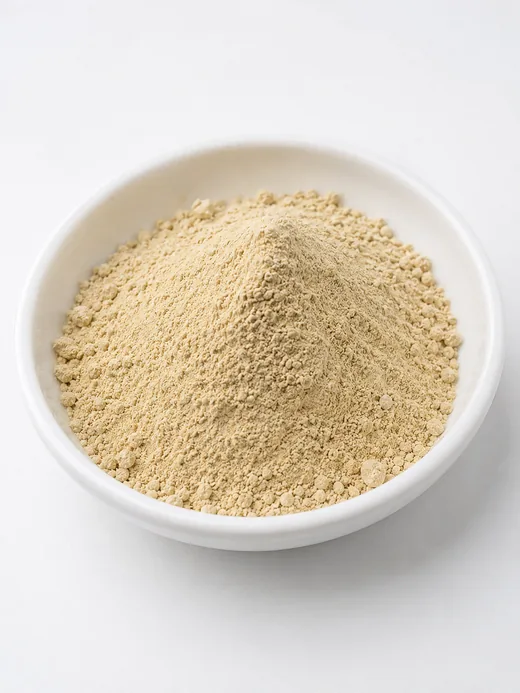
Actual Product
Asparagus racemosus · 40% Saponins · Actual BatchThe Ayurvedic "Queen of Herbs" — a 3,000-year legacy in women's wellness
Shatavari (Asparagus racemosus) is one of the most revered herbs in the Ayurvedic pharmacopoeia, classified as a Rasayana — a rejuvenating tonic that promotes longevity, vitality, and resilience. Its Sanskrit name translates to "she who possesses a hundred husbands," a traditional reference to the herb's profound support for female reproductive health and vitality.
The primary bioactive compounds are steroidal saponins known as Shatavarins (particularly Shatavarin I, II, III, and IV), along with isoflavonoids, alkaloids (asparagamine A), polysaccharides, mucilage, and flavonoids including quercetin and rutin. These compounds collectively underpin Shatavari's phytoestrogenic, adaptogenic, immunomodulatory, and gastro-protective properties.
SV Botanica sources Shatavari roots from certified cultivation zones in Madhya Pradesh and Rajasthan — regions recognised for producing roots with consistently high saponin content. Our extraction process uses a validated water-ethanol system to preserve the full saponin profile, yielding a clean, yellowish-brown fine powder that disperses readily in formulations.
We supply leading supplement brands, Ayurvedic manufacturers, functional food companies, and contract formulators across Europe, the USA, the Middle East, and Southeast Asia. New buyers can start with our Shatavari extract buyer's guide for sourcing and specification benchmarks.
Key phytochemicals driving Shatavari's therapeutic profile
Steroidal glycosides — the primary marker compounds. Shatavarin IV is most studied for phytoestrogenic and galactagogue activity.
A unique polycyclic alkaloid studied for immunomodulatory activity in preclinical models.
Isoflavonoids providing antioxidant and anti-inflammatory activity, complementary to the saponin fraction.
Demulcent fraction responsible for gut mucosa protection and prebiotic activity — key for digestive health formulations.
Flavonoids contributing antioxidant, anti-inflammatory, and vascular-toning effects.
Quantified gravimetrically at 20%–60% in standardised grades. Total saponin content is the primary CoA specification.
Evidence from Ayurvedic texts, clinical studies, and ethnopharmacological research
Shatavarins are the phytoestrogenic constituents of the root and the compounds most examined in women's-health research, which is why this material anchors formulations across the reproductive lifespan. The claims permitted in this category are narrow in most markets and are worth settling before labelling.
Ref: Sharma S et al., 2011; J EthnopharmacolThe most extensively studied of shatavari's traditional uses, and the basis for its long-standing position in postnatal formulations. Published randomised research has examined the root extract's effect on prolactin in postnatal women. What may actually be said on a label in this area is narrowly restricted in most markets, so settle the permitted wording with your regulatory adviser before designing the pack.
Ref: Mortel M & Mehta SD, 2013; J Altern Complement MedShatavari modulates HPA axis activity, reducing cortisol-driven stress responses. Racemosol and saponins support neurotransmitter balance. Used alongside Ashwagandha in female-specific adaptogen blends for fatigue and stress.
Ref: Bhatnagar M et al., 2005; Neurochem ResAsparagamine A and polysaccharides upregulate macrophage activity and NK cell proliferation. Traditional use as a post-illness restorative is now supported by preclinical immunology data showing enhanced cytokine production.
Ref: Gautam M et al., 2004; J EthnopharmacolThe mucilaginous polysaccharide fraction is the basis for shatavari's use in gastric-comfort formats, and the same fraction carries prebiotic activity relevant to gut-microbiome formulations — a growing application in gut-health supplement categories.
Ref: Alok S et al., 2013; J Trad Complement MedQuercetin, rutin, and racemofuran provide potent free radical scavenging activity. The Rasayana classification in Ayurveda correlates with modern anti-ageing research showing reduced oxidative stress markers in vivo.
Ref: Kamat JP et al., 2000; Free Radic ResFor a formulator-focused breakdown of actions and pairings, see Shatavari vs Ashwagandha for women's health.
Select the right standardisation and form for your formulation requirement
| Grade | Saponin Content | Form | Best For | Certifications |
|---|---|---|---|---|
| Standard 20% Entry | ≥20% total saponins (gravimetric) | Fine powder, ≥95% through #40 mesh | Food supplements, Ayurvedic formulations, herbal teas | GMP, ISO, FSSAI |
| Standard 40% Popular | ≥40% total saponins (gravimetric) | Fine powder, ≥95% through #40 mesh | Women's health capsules, functional beverages, nutraceutical blends | GMP, ISO, Halal, Kosher |
| High Potency 60% Premium | ≥60% total saponins (gravimetric) | Fine powder, 100% through #40 mesh | Pharmaceutical-grade formulations, clinical-dose supplements | GMP, ISO, Halal, Kosher |
| Organic 40% Organic | ≥40% total saponins (gravimetric) | Fine powder, ≥95% through #40 mesh | Organic-certified product lines, EU/US natural market | USDA NOP, EU Organic, GMP, ISO |
| Water-Soluble Grade | ≥20% saponins equiv. | Granular / spray-dried | Beverages, shots, effervescent tablets, sachets | GMP, ISO, FSSAI, Food-grade |
Representative batch assays on file: 20% grade — 21.5% saponins (CoA SVB-COA-AR20-0625-01); 40% grade — 41.35% saponins (CoA SVB-COA-ST40-0426-01); 60% grade — 61.7% saponins (CoA SVB-COA-AR60-1125-01). Custom standardisations and mesh sizes available for orders ≥100 kg.
Shatavari is bought in four forms. The standardised extract is the stocked item; the others are sourced against a confirmed order.
| Form | What it is | Specification basis | Availability |
|---|---|---|---|
| Standardised root extract powder | Asparagus racemosus root, hydroalcoholic extraction, dried and milled | 20%, 40% or 60% total saponins (gravimetric; HPLC shatavarin IV on request) | Stocked; batch COAs on file for all three grades |
| Water-soluble granules | Spray-dried or granulated root extract on a food-grade carrier | ≥20% saponins equivalent | On request; beverages, shots, effervescent tablets, sachets |
| Root powder (non-extracted) | Cleaned, dried Asparagus racemosus root, milled to mesh | Botanical identity by TLC; heavy metals and microbial panel | On enquiry, subject to lot; phytosanitary certificate usually required |
| Cut & sifted root | Dried root pieces, sifted to size | Identity, moisture, foreign matter | On enquiry; for tea, decoction and in-house extraction |
A saponin percentage without a method is not a specification: the gravimetric total and an HPLC shatavarin figure are different numbers on the same powder — see shatavari saponins: gravimetric vs HPLC and how the grades are standardised. For use levels by application, see the shatavari dosage guide.
Full analytical profile — Standard 40% Saponins grade (representative batch SVB/ST40/2604-01)
| Parameter | Specification | Typical Result |
|---|---|---|
| Botanical Source | Asparagus racemosus Willd. | Conforms |
| Plant Family | Asparagaceae | — |
| Part Used | Tuberous roots (dried) | — |
| CAS Number | 84696-15-1 (Shatavari root extract) | — |
| INCI Name | Asparagus Racemosus Root Extract | — |
| HS Code | 1302.19 (vegetable saps and extracts); 8-digit line confirmed per destination on the pro forma | — |
| Identification (TLC) | Positive vs. reference | Positive |
| Marker Compound | Total steroidal saponins (Shatavarins) | — |
| Assay Method | Gravimetric (on dry-weight basis) | — |
| Total Saponins | NLT 40.0% (Standard 40% grade) | 41.35% |
| Appearance | Yellowish-brown fine powder | Conforms |
| Odour & Taste | Characteristic; slightly sweet | Conforms |
| Particle Size | NLT 95% through #40 mesh | 96.98% |
| Loss on Drying (105°C) | NMT 10.0% w/w | 2.78% |
| Ash Content | NMT 10.0% w/w | 1.92% |
| Bulk Density | NLT 0.25 g/mL | 0.771 g/mL |
| pH (1% aqueous solution) | 3.0–7.0 | 5.26 |
| Solubility in Water | NLT 85% w/w | 98.51% |
| Heavy Metals (ICP-MS) | Pb ≤1.0 · As ≤1.0 · Cd ≤0.3 · Hg ≤0.1 ppm | Complies |
| Residual Solvents | Comply with USP <467> limits | Complies |
| Pesticide Residues | Compliant with EU MRL (EC 396/2005) | Complies |
| Total Plate Count | NMT 1,000 CFU/g | 223 |
| Yeast & Mould | NMT 100 CFU/g | 29 |
| E. coli / Salmonella / S. aureus | Absent | Absent |
| Shelf Life | 24–36 months (sealed, ≤25°C, <60% RH, dark) | — |
| Packaging | 25 kg HDPE drum with inner PE liner; 500 kg FIBC on request | — |
Total saponins are quantified gravimetrically — the industry-standard method for total steroidal saponins. A defined Shatavarin IV assay by HPLC/HPTLC is available on request for pharma-grade specifications. A current Certificate of Analysis, MSDS, and allergen/Non-GMO declarations are issued with every batch. Specifications for 20% and 60% grades available on request.
Real lot documents, published as issued — what you receive with a quotation and with every shipment
With every shipment: batch COA, specification sheet, SDS, allergen statement, non-GMO, non-irradiation and ETO declarations, packing list and certificate of origin, plus a phytosanitary certificate where the destination requires one. Independent pre-shipment testing at Eurofins, SGS or Intertek is arranged on request and priced into the quotation. Other grades' COAs are shared at quotation.
Total saponins are stated gravimetrically on a dry-weight basis, the method used across the Indian export trade for this root, and the batch result is printed on every COA. Shatavarin IV by HPLC is reported per lot on request while a standing HPLC-standardised grade is under qualification; ask for it at quotation if your specification names it. The EU-grade lot published above carries the full EU residue panel: pesticides against Reg. 396/2005, ethylene oxide, PAH and aflatoxins.
The commercial facts a procurement team needs before the first call
From root to finished extract — traceable, tested, certified
Raw Material Sourcing: Shatavari roots are sourced from authenticated Asparagus racemosus cultivation under Good Agricultural and Collection Practices (GACP). Our primary sourcing regions — Madhya Pradesh and Rajasthan — are selected for consistent saponin expression. Botanical authentication is performed by our in-house taxonomist using macroscopic, microscopic, and TLC fingerprinting against pharmacopoeial standards (Ayurvedic Pharmacopoeia of India).
Manufacturing: Extraction is carried out in GMP-certified facilities (WHO-GMP and ISO 22000 audited) using validated water-ethanol parameters. Drying is performed under controlled temperatures to preserve saponin integrity. Each batch runs through a full QC battery — gravimetric saponin assay, TLC fingerprint, heavy-metals ICP-MS, pesticide-residue GC-MS/LC-MS, and a full microbiological panel — before release.
Documentation: Every shipment comes with Certificate of Analysis (CoA), MSDS, Allergen Declaration, BSE/TSE-free statement, Non-GMO affidavit, Country of Origin Certificate, and Phytosanitary Certificate. Halal, Kosher, USDA Organic, and EU Organic certificates are available for the appropriate grades. Procurement teams can reference our Shatavari supplier evaluation guide when qualifying vendors.
Full compliance for global B2B supply
Key information for global product registration and labelling
Shatavari Extract is permitted in food supplements in the EU with a documented history of use prior to May 1997 (not classified as Novel Food). Labelling must comply with Regulation (EU) 1169/2011. Botanical declaration as Asparagus racemosus root extract is standard.
Classified as a dietary ingredient under DSHEA (21 CFR Part 111). No pre-market approval required for dietary supplements. Facility registration under the FDA is required for importers. Structure-function claims are permissible with 30-day FDA notification and substantiation.
Recognised as a classical Ayurvedic ingredient under the Drugs and Cosmetics Act, and FSSAI-compliant for food-supplement use under the FSS (Health Supplements) Regulations 2022. Widely accepted in the Middle East (Halal grades), Southeast Asia, Australia (TGA listed), and Canada (NHPD).
Deep-dive articles for formulators, buyers, and brand owners
How to specify grade, assay method, and documentation when sourcing.
FormulationEvidence-based dose ranges by application and standardisation.
ComparisonChoosing the right adaptogen for women's health formulations.
MarketCategory trends driving demand for Shatavari ingredients.
ProcurementA checklist for qualifying a Shatavari extract supplier.
TechnicalWhy two extracts at the same saponin % can differ, and how to read the CoA.
QualityThe published EU-grade certificate, line by line.
AuthenticitySpecies substitution, starch bulking and saponin inflation, with the controls for each.
ProcurementA clause-by-clause purchase specification, including the HPLC shatavarin line.
ComparisonGrade selection by dose, format and cost per active.
FormulationThe evidence, the claim boundaries by market, and the formulation.
SourcingCultivation belts, harvest calendar and wild-collection pressure.
Frequently co-formulated with Shatavari Extract
Technical and commercial questions answered by our ingredients team
Tell us the grade, quantity and destination — a specification sheet and pricing follow, usually within one working day
Made at GMP-certified facilities, lab-tested, fully documented supply. Conventional and USDA Organic grades available. Minimum order 25 kg. Samples available for qualified buyers.
Supplied as a bulk ingredient for further manufacture. Buyers are responsible for compliance with the regulations of their destination market. This product is not intended to diagnose, treat, cure or prevent any disease.
We use cookies for analytics and to measure our advertising. Essential cookies are always on. Privacy policy