Rhodiola rosea L. · Root & Rhizome · Standardized to 3% Rosavins & 1% Salidroside
The classic high-altitude adaptogen — golden root — used for centuries in Russia, Scandinavia and the Himalaya to build resilience to stress, fatigue and mental strain. SV Botanica supplies an authenticated Rhodiola rosea root extract standardized to 3% rosavins and 1% salidroside by HPLC, the marker profile that distinguishes true R. rosea from R. crenulata — heavy-metal tested and made at GMP-certified facilities, with 5% rosavin grades available per batch.
Bulk Ingredient
Rhodiola rosea · Root & Rhizome · RosavinsThe high-altitude adaptogen, concentrated to a defined rosavin/salidroside profile
Rhodiola rosea — golden root or roseroot — is a cold-climate adaptogen with a long tradition of use across Russia, Scandinavia and the Himalaya for stress resilience, fatigue and mental performance. Its activity is attributed to two marker groups concentrated in the root and rhizome: the rosavins (rosavin, rosarin and rosin) and the phenylethanoid salidroside.
SV Botanica supplies Rhodiola Rosea Extract standardized to 3% rosavins and 1% salidroside, assayed by HPLC and identity-confirmed by TLC/HPTLC. Higher-potency 5% rosavins / 1.8% salidroside grades are produced on request, with an HPLC report on both marker groups per batch — so authenticity is never assumed from a single number.
A note on origin: Rhodiola rosea is not a lowland Indian crop — it grows at high altitude in arctic and alpine regions (Altai, Siberia, Scandinavia and the high Himalaya). We source authenticated high-altitude root and process, standardise and QC-test it in India for global export, with origin and identity documentation per batch.
A note on identity: true rosavin-bearing Rhodiola is R. rosea. The related R. crenulata contains salidroside but little or no rosavin, so a salidroside-only spec can mask a substitution — see Rhodiola rosea vs crenulata. We supply supplement, nootropic, sports-nutrition and adaptogen manufacturers across Europe, the USA, the Middle East and Southeast Asia — start with the quote request form or the full Rhodiola extract buyer's guide.
Key compounds driving Rhodiola's adaptogenic profile
The principal cinnamyl alcohol glycoside and lead standardisation marker — present in R. rosea but essentially absent from other Rhodiola species.
The two companion rosavin-group glycosides that, with rosavin, make up the "total rosavins" figure quantified by HPLC.
A phenylethanoid (tyrosol) glycoside, the second marker group — standardised alongside rosavins in the classic 3:1 ratio.
The aglycone of salidroside and an antioxidant phenylethanoid that accompanies the glycosides in the root matrix.
A monoterpene glycoside of the roseroot matrix, part of the wider fingerprint used in identity and authenticity work.
Rhodiola flavonoids (e.g. rhodiolin, tricin glycosides) and the native root matrix round out the full-spectrum standardised grade.
Evidence from clinical research on Rhodiola rosea and its adaptogenic markers
A standardised extract reduced mental fatigue and improved work capacity in physicians on stressful night duty in a randomised, placebo-controlled trial.
Ref: Darbinyan V et al., 2000; PhytomedicineRhodiola improved mental performance and reduced fatigue in students during a stressful examination period versus placebo.
Ref: Spasov AA et al., 2000; PhytomedicineRepeated dosing of a standardised extract (SHR-5) eased symptoms of stress-related fatigue and improved attention in a placebo-controlled study.
Ref: Olsson EM et al., 2009; Planta MedicaA single low dose improved capacity for mental work against a background of fatigue in a double-blind, placebo-controlled crossover trial.
Ref: Shevtsov VA et al., 2003; PhytomedicineStandardised Rhodiola improved self-reported life-stress symptoms — fatigue, exhaustion and anxiety — over the treatment period in an open-label trial.
Ref: Edwards D et al., 2012; Phytother ResA Rhodiola extract showed favourable effects on anxiety symptoms in a pilot study, consistent with its classical adaptogen positioning.
Ref: Bystritsky A et al., 2008; J Altern Complement MedRhodiola pairs naturally with other adaptogen and nootropic botanicals — see our Ashwagandha Extract and Brahmi Extract for stress and cognition blends. For the science behind the markers, read rosavins & salidroside: the research.
Select the right rosavin/salidroside profile for your formulation
| Grade | Specification | Assay | Best For | Certifications |
|---|---|---|---|---|
| 3% Rosavins / 1% Salidroside Standard | NLT 3% rosavins & NLT 1% salidroside (≈3:1) | HPLC | Clinically-matched stress & energy formulas | GMP, Halal |
| 5% Rosavins / 1.8% Salidroside High | NLT 5% rosavins & NLT 1.8% salidroside | HPLC | High-potency adaptogen & sports products | GMP, Halal |
| Salidroside 1% Marker | NLT 1% salidroside (rosavin specified on request) | HPLC | Salidroside-led labels & monograph specs | GMP, Kosher |
| Custom Ratio On Request | Defined rosavins & salidroside to your spec | HPLC | Brand-specific or research-matched profiles | Available per batch |
| Organic / Ratio Extract | Standardised; organic on request | HPLC | Certified-organic supplement products | GMP, Organic (on request) |
The documented stock grade is 3% rosavins & 1% salidroside by HPLC (the grade backed by our current Certificate of Analysis). Because only Rhodiola rosea carries rosavins, we standardise to a specified rosavin percentage rather than salidroside alone — see rosavins vs salidroside: HPLC standardisation before comparing quotes.
Rhodiola Rosea Extract is bought in five forms. The standardised extract is the stocked item; granulated and dispersible grades are produced on request and raw botanical forms are sourced against a confirmed order.
| Form | What it is | Specification basis | Availability |
|---|---|---|---|
| Standardised extract powder | Rhodiola rosea root and rhizome extract, dried and milled | NLT 3% rosavins and 1% salidroside (HPLC) | Stocked |
| Granulated (direct-compression) | Extract granulated for tablet lines | Same marker, declared on the granule | On request |
| Water-dispersible / soluble | Extract in a dispersible matrix for beverages, gummies and sachets | Marker declared on the matrix basis; carrier named | On request |
| Root powder (non-extracted) | Cleaned, dried Rhodiola rosea root and rhizome, milled to mesh | Botanical identity by TLC; heavy metals and microbial panel | On enquiry, subject to lot; phytosanitary certificate usually required |
| Cut & sifted root | Dried root pieces, sifted to size | Identity, moisture, foreign matter | On enquiry; for tea, decoction and in-house extraction |
A marker percentage without its assay method is not a specification; ask for the method and the plant part on every quotation. Read Rhodiola rosea vs crenulata: Identity, Adulteration and the Rosavin Test, Rhodiola Rosea Extract Buyer's Guide: Grades, Markers & Sourcing and Rosavins & Salidroside: What the Research on Rhodiola Shows before comparing offers.
Typical specification — 3% rosavins / 1% salidroside root grade (mapped from a current batch CoA)
| Parameter | Specification | Method |
|---|---|---|
| Botanical Name | Rhodiola rosea L. | — |
| Part Used | Root and rhizome | — |
| Rosavins | NLT 3.0% (5% grade available) | HPLC |
| Salidroside | NLT 1.0% (1.8% grade available) | HPLC |
| Identification | Positive for R. rosea vs. reference | TLC / HPTLC |
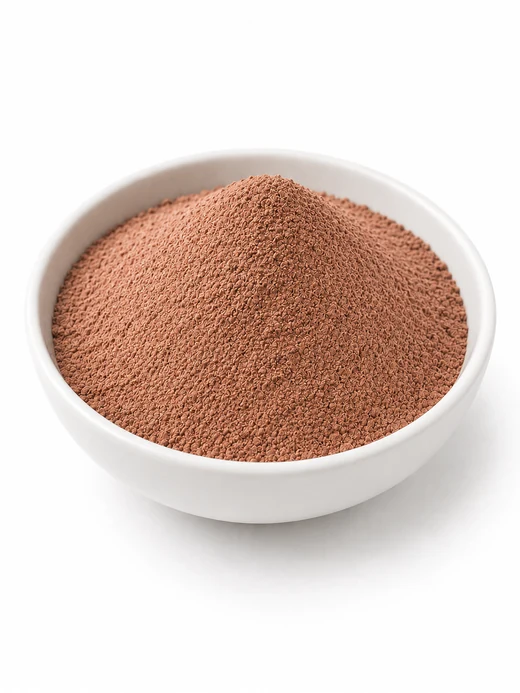
| Appearance | Pinkish-brown to rose-tan fine powder | Organoleptic |
| Loss on Drying / Moisture | NMT 5.0% | IP-2014 |
| pH (1% solution) | 4 – 6.5 | IP-2014 |
| Bulk Density | NLT 0.35 g/mL | IP-2014 |
| Extraction Solvent | Ethanol & water (hydro-alcoholic) | — |
| Ash Content | NMT 8.0% | IP-2014 |
| Particle Size | NLT 95% through #80 mesh | Sieve |
| Heavy Metals (Pb/As/Cd/Hg) | ≤1 · ≤1 · ≤0.3 · ≤0.1 ppm | ICP-MS |
| Total Plate Count | NMT 1,000 CFU/g | USP <2021> |
| Yeast & Mould | NMT 100 CFU/g | USP <2021> |
| E. coli / Salmonella / S. aureus | Absent | USP <2022> |
| Shelf Life | 36 months (sealed, cool, dry) | — |
| Packaging | 25 kg HDPE drum with inner PE liner; 1 & 5 kg pouches for samples | — |
Figures shown are typical specifications for the 3% rosavins / 1% salidroside root grade and reflect our current Certificate of Analysis; a batch-specific CoA is issued with every shipment, quantifying both rosavins and salidroside by HPLC. MSDS, allergen and Non-GMO declarations accompany each batch. Specifications for 5% rosavin, salidroside-led, organic and custom-ratio grades available on request.
From authenticated high-altitude root to a defined rosavin grade — traceable, tested, certified
Raw Material Sourcing: Rhodiola is sourced as authenticated Rhodiola rosea root and rhizome from cold, high-altitude origins (Altai / Himalayan region), where the rosavin-bearing species grows. Because Rhodiola rosea is not cultivated in the Indian plains, origin and species identity are documented at intake and confirmed by HPTLC — the safeguard against R. crenulata substitution.
Manufacturing & Testing: Root is cleaned, milled, hydro-alcoholically extracted and standardised to rosavins and salidroside in GMP-certified facilities in India. Each batch runs a full QC battery — TLC/HPTLC identity, HPLC assay of both rosavins and salidroside, sieve, pH, ash and bulk-density checks, heavy metals by ICP-MS, and a complete microbiological panel — before release.
Documentation: Every shipment comes with a Certificate of Analysis, MSDS, Allergen Declaration, BSE/TSE-free statement, Non-GMO affidavit and Country of Origin Certificate. Halal and Kosher grades are available; organic certification on request. To qualify our facility or request specifications, reach our team via the certifications page or the quote form.
Full compliance for global B2B supply
Key information for global product registration and labelling
Rhodiola rosea root is widely used in food supplements across the EU and appears on national botanical lists; several member states recognise traditional-use positioning. Heavy-metal limits (Reg. (EU) 2023/915) and pesticide MRLs (Reg. 396/2005) apply, and labelling must comply with Regulation (EU) 1169/2011. Confirm species authenticity (rosavin-bearing R. rosea) for any traditional-use claim. See our regulatory & compliance guide.
Marketed as a dietary ingredient under DSHEA (21 CFR Part 111) with a history of use. No pre-market approval is required, but importer facility registration with the FDA is needed. Heavy-metal limits (e.g. California Prop 65) make ICP-MS-tested material essential, and structure-function claims require substantiation and FDA notification.
Rhodiola is a well-known high-altitude adaptogen used in Himalayan and Amchi (Sowa-Rigpa) traditions and is relevant for supplement use under the FSS (Health Supplements) Regulations 2022. Widely accepted across the Middle East (Halal grades), Southeast Asia and other markets, subject to local heavy-metal and labelling limits.
Frequently co-formulated with Rhodiola Rosea Extract
Deep-dive articles for formulators, buyers, and brand owners
Grades, the rosavin:salidroside ratio, full CoA spec table and what to verify before ordering.
ScienceWhat the markers do, why the ratio matters, and the human evidence for stress and fatigue.
QualityWhy rosavins need HPLC, what a salidroside-only number hides, and how to read the CoA.
IdentityThe species-substitution problem — how rosavins tell authentic R. rosea from R. crenulata.
RegulatoryEU heavy-metal & MRL limits, US & India labelling, authenticity and export documentation.
SourcingHigh-altitude wild vs cultivated root, sustainability, and how to de-risk bulk supply.
Technical and commercial questions answered by our ingredients team
Made at GMP-certified facilities, authenticated R. rosea root, heavy-metal tested and fully documented supply. 3% rosavins / 1% salidroside stock grade by HPLC; 5% rosavin, salidroside-led, organic and custom-ratio grades on request. Minimum order 25 kg. Samples available for qualified buyers.
Supplied as a bulk ingredient for further manufacture. Buyers are responsible for compliance with the regulations of their destination market. This product is not intended to diagnose, treat, cure or prevent any disease.
We use cookies for analytics and to measure our advertising. Essential cookies are always on. Privacy policy