
Chlorophytum borivilianum · Family: Asparagaceae · Root Extract
A water-soluble safed musli root extract standardised to 40% saponins by gravimetric assay. Prepared from the fasciculated tuberous roots of Chlorophytum borivilianum for nutraceutical, Ayurvedic, and functional formulators. CoA-backed supply from India.
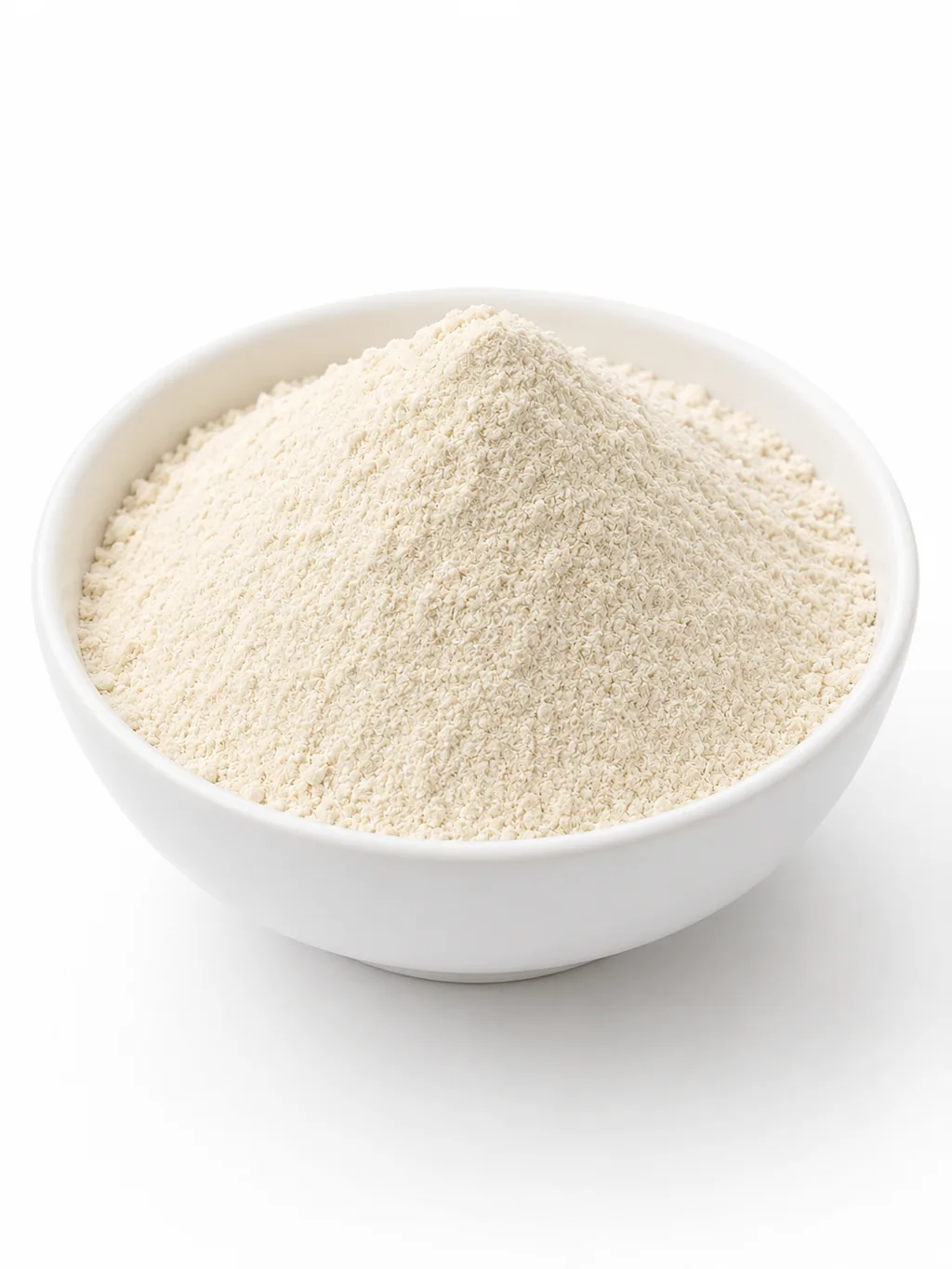
Actual Product
Chlorophytum borivilianum · 40% Saponins · Actual BatchA saponin-standardised botanical active from a prized Ayurvedic root
Safed Musli (Chlorophytum borivilianum) is a herb whose white, fasciculated tuberous roots have been used for centuries in Ayurveda as a rasayana — a rejuvenating tonic. The dried roots are rich in steroidal saponins, and it is these compounds that make a concentrated, standardised extract a practical way for formulators to deliver a defined active load rather than an undefined root powder.
The characteristic constituents of the root are its steroidal saponins and their sapogenins, alongside a substantial fraction of polysaccharides (fructans and mucilage) and minor proteins and alkaloids. SV Botanica standardises this extract to total saponins not less than 40%, quantified gravimetrically on a dry basis, so every batch is defined by its most meaningful marker.
The extract is prepared from root material of Indian origin and finished as a free-flowing, water-soluble brown powder. High water solubility (not less than 85% w/w) makes it well suited to capsules, tablets, sachets and liquid formats. As a natural botanical, slight colour variation between batches is normal and reflects seasonal and geographical variation in the raw root.
We supply nutraceutical brands, Ayurvedic manufacturers, and functional-food formulators against buyer specifications, with a batch-specific Certificate of Analysis on every shipment. New buyers can start with our safed musli extract buyer's guide for sourcing and specification benchmarks.
The phytochemicals that define safed musli root
The signature actives of the root and the basis of standardisation — total saponins are held to not less than 40% w/w by gravimetric assay.
The steroidal aglycone backbones the saponin glycosides are built on, released on hydrolysis of the saponin fraction.
Safed musli roots are naturally rich in mucilaginous polysaccharides and fructans, a major part of the root's dry matter.
The root contributes a modest fraction of proteins and free amino acids alongside the carbohydrate and saponin content.
Trace alkaloids and other secondary metabolites native to the root, present at minor levels in the finished extract.
Total saponin content forms the identity and assay basis of every batch — quantified gravimetrically on a dry basis before release.
Why formulators specify a standardised safed musli extract — the functional role of the actives
Standardisation to not less than 40% total saponins gives a reproducible active load batch to batch, replacing undefined root powder with a specified ingredient.
Safed musli is an established Ayurvedic rasayana used in vitality, energy and men's-wellness product categories, making it a recognised hero botanical for supplement brands.
Solubility of not less than 85% (a representative batch tested 92.7%) allows clean incorporation into capsules, sachets, functional beverages and liquid bases.
Saponins are naturally foaming, surface-active glycosides — a property of interest to personal-care formulators looking for plant-derived surfactant inputs.
Standardisation to a measured total-saponin figure, with TLC identity, gives a defensible specification for a root that is otherwise easy to substitute or dilute.
A free-flowing powder passing ≥95% through #40 mesh with controlled bulk density disperses and blends predictably across batches.
These are functional and physico-chemical properties of the actives; SV Botanica does not make medical or therapeutic claims for this ingredient. For the analytical detail behind the marker, see saponins & how safed musli extract is standardised.
The core specification supplied against document SVB/QC/PS/SM/001
| Grade | Standardisation | Form | Best For | Solubility |
|---|---|---|---|---|
| Nutraceutical Grade Standard | Saponins NLT 40% (Gravimetric) | Brown powder, ≥95% through #40 mesh | Vitality & wellness capsules, tablets, sachets | Water-soluble |
| Ayurvedic / Functional Same spec | Saponins NLT 40% (Gravimetric) | Free-flowing powder, ≥95% through #40 mesh | Ayurvedic proprietary medicines, functional foods | Water-soluble |
Standardisation is to total saponins (not less than 40% w/w) by gravimetric assay on a dry basis, with identity confirmed by TLC. Lower saponin grades (e.g. 10%, 20%) and custom mesh or packaging can be quoted against buyer specification and order volume. Every batch is released against a batch-specific Certificate of Analysis.
Safed Musli Extract is bought in five forms. The standardised extract is the stocked item; granulated and dispersible grades are produced on request and raw botanical forms are sourced against a confirmed order.
| Form | What it is | Specification basis | Availability |
|---|---|---|---|
| Standardised extract powder | Chlorophytum borivilianum root extract, dried and milled | NLT 40% saponins (gravimetric) | Stocked |
| Granulated (direct-compression) | Extract granulated for tablet lines | Same marker, declared on the granule | On request |
| Water-dispersible / soluble | Extract in a dispersible matrix for beverages, gummies and sachets | Marker declared on the matrix basis; carrier named | On request |
| Root powder (non-extracted) | Cleaned, dried Chlorophytum borivilianum root, milled to mesh | Botanical identity by TLC; heavy metals and microbial panel | On enquiry, subject to lot; phytosanitary certificate usually required |
| Cut & sifted root | Dried root pieces, sifted to size | Identity, moisture, foreign matter | On enquiry; for tea, decoction and in-house extraction |
A marker percentage without its assay method is not a specification; ask for the method and the plant part on every quotation. Read Safed Musli Extract: A Complete Buyer's Guide for Formulators, Saponins: How Safed Musli Extract Is Standardised and Safed Musli Extract: A Supplier Evaluation Guide before comparing offers.
Full product specification per SVB/QC/PS/SM/001 (Rev 00), with results from a representative production batch. A batch-specific CoA is issued per shipment.
| Parameter | Specification / Limit | Result (Representative Batch) | Method |
|---|---|---|---|
| Botanical Source | Chlorophytum borivilianum | Complies | — |
| Plant Family | Asparagaceae | — | — |
| Part Used | Roots (dried tubers) | Complies | — |
| Country of Origin | India | Complies | — |
| Appearance | Brown fine powder | Complies | Organoleptic |
| Colour | Brown* | Complies | Organoleptic |
| Odour | Characteristic | Complies | Organoleptic |
| Taste | Characteristic | Complies | Organoleptic |
| Identification | TLC identification test positive | Positive | By TLC |
| Loss on Drying (at 105°C, % w/w) | NMT 5.0 | 2.88 | Gravimetric |
| pH (1% w/v solution) | 3.0 – 7.0 | 4.44 | Potentiometric |
| Water Solubility (% w/w) | NLT 85.0 | 92.66 | In-house |
| Bulk Density (g/ml) | NLT 0.25 | 0.596 | USP <616> |
| Ash Content (% w/w) | NMT 10.0 | 2.43 | Gravimetric |
| Particle Size (#40 mesh, % w/w) | NLT 95.0 | 95.48 | Sieve |
| Total Saponins, dry basis (% w/w) | NLT 40.0 | 40.26 | Gravimetric |
| Lead (ppm) | NMT 1.0 | Complies | ICP-MS |
| Arsenic (ppm) | NMT 1.0 | Complies | ICP-MS |
| Cadmium (ppm) | NMT 1.0 | Complies | ICP-MS |
| Mercury (ppm) | NMT 0.5 | Complies | ICP-MS |
| Total Plate Count (cfu/g) | NMT 1,000 | 110 | USP <2021> |
| Yeast & Mould / Fungi (cfu/g) | NMT 100 | 09 | USP <2021> |
| Escherichia coli | Absent | Negative | USP <2022> |
| Salmonella sp. | Absent | Negative | USP <2022> |
| Staphylococcus aureus | Absent | Negative | USP <2022> |
| Cultivation Status | Cultivated | Complies | Declaration |
| Sanitising Treatment | Non-irradiated | Complies | Declaration |
| Genetic Modification Status | GMO-free | Complies | Declaration |
| Shelf Life | 36 months from date of manufacture, in original packed condition | — | — |
| Storage | Cool, dry place away from light, heat and moisture | — | — |
Representative Certificate of Analysis — Batch No. SVB-SM40-240917 (batch size 500 kg). *The product is of herbal origin; slight colour variation may occur due to geographical and seasonal variation in the raw material. Results shown are from a single representative batch and vary within specification between batches; a current batch-specific CoA and MSDS are issued with every shipment. The material is declared fit for human consumption. Halal certification is available on request.
From root to standardised extract — identified, tested, documented
Raw Material & Authentication: The extract is prepared from the dried roots of Chlorophytum borivilianum of Indian origin. Because safed musli is a high-value root that is commonly substituted with cheaper Chlorophytum species and other tubers, identity is central to release: every batch is confirmed by a TLC identification test before it is accepted.
Manufacturing & Testing: Safed Musli Dry Extract is manufactured to specification SVB/QC/PS/SM/001 at ISO 9001:2015 and GMP certified facilities. Each batch runs through a full QC battery — total saponin assay by gravimetric method, loss on drying, pH, ash, bulk density and mesh, heavy metals by ICP-MS, and a complete microbiological panel — before release.
Documentation: Every shipment is supplied against a batch-specific Certificate of Analysis with an MSDS, plus declarations covering cultivation status, sanitising treatment (non-irradiated) and GMO status (GMO-free). Halal certification, Country of Origin and export documentation are provided on request. Procurement teams can reference our safed musli extract supplier evaluation guide when qualifying vendors.
What backs every batch of safed musli extract
Key information for global product registration and labelling
Where used as a botanical active in supplement or functional formats, the extract is supplied to a defined total-saponin specification with full analytical documentation. Buyers are responsible for determining suitability and for compliance with the relevant food-supplement regulations in their market. This product is not intended to diagnose, treat, cure or prevent any disease.
Safed musli (Chlorophytum borivilianum) is a classical Ayurvedic rasayana ingredient. Where formulated into Ayurvedic proprietary products, buyers should confirm labelling, permitted claims and registration requirements in their jurisdiction; SV Botanica supplies the material specification and CoA to support that dossier.
Supplied from India by SV Botanica — FSSAI Central Licence holder and an APEDA-registered exporter. Material is declared as cultivated, non-irradiated and GMO-free, and shipped against a batch-specific Certificate of Analysis with Halal certification and export documentation available on request.
Deep-dive articles for formulators, buyers, and brand owners
How to specify saponin content, method, and documentation when sourcing.
TechnicalWhat total saponins mean and how the extract is standardised (gravimetric vs HPLC).
QualityHow safed musli is substituted and how to verify a genuine root extract.
FormulationUsing a saponin-standardised extract in vitality and sports-nutrition products.
ProcurementA checklist for qualifying a safed musli extract supplier from India.
MarketDemand drivers and end-uses shaping the safed musli extract category.
Frequently co-formulated with Safed Musli Extract in vitality & wellness blends
Technical and commercial questions answered by our ingredients team
Saponin-standardised, lab-tested, fully documented supply of water-soluble safed musli root extract. Standardised to 40% saponins by gravimetric. Samples available for qualified buyers.
Supplied as a bulk ingredient for further manufacture. Buyers are responsible for compliance with the regulations of their destination market. This product is not intended to diagnose, treat, cure or prevent any disease.
We use cookies for analytics and to measure our advertising. Essential cookies are always on. Privacy policy